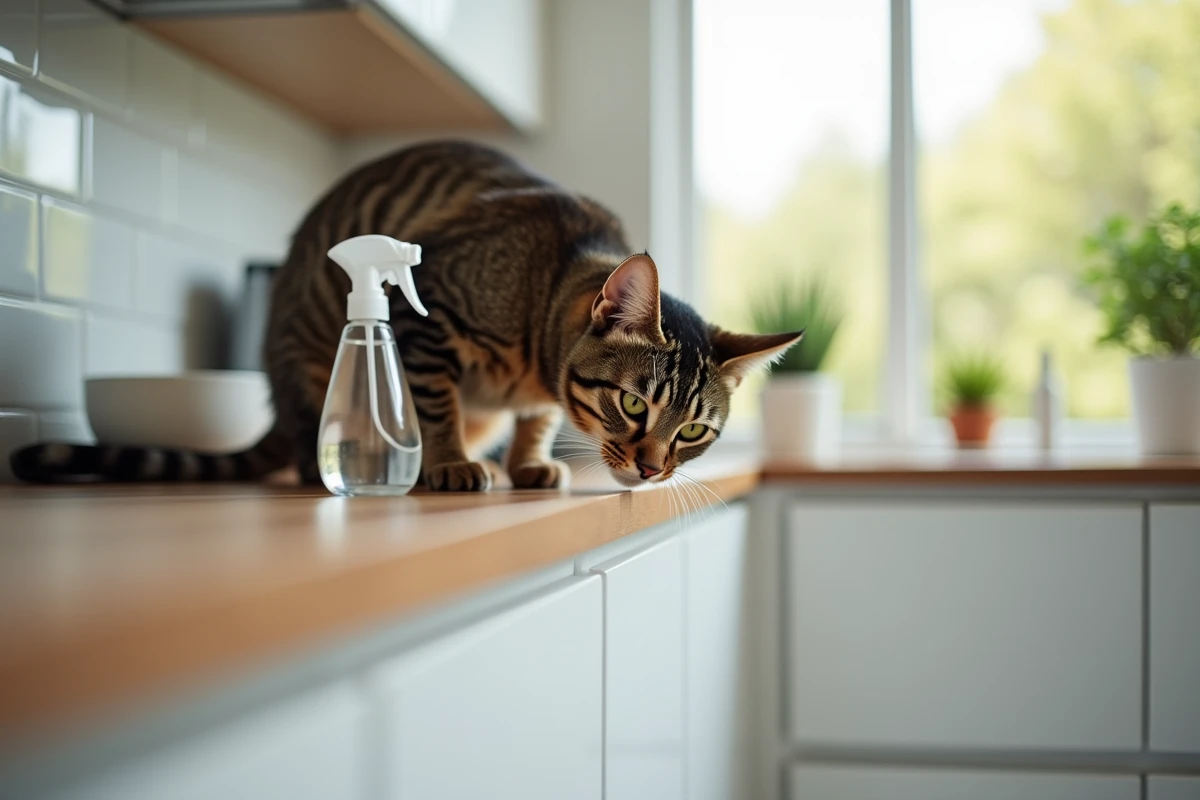
A cat that keeps scratching the planters, urinating on the doormat, or settling on the couch despite the prohibitions: we have all looked for a quick solution in the kitchen cupboard. White vinegar consistently comes up in online recommendations. Its acidic smell is unpleasant to felines, that’s a fact. But there is a significant gap between repelling a cat for five minutes and solving a behavioral problem in the long term.
Why the smell of white vinegar bothers felines
A cat’s nose has far more olfactory receptors than that of a human. The acetic acid in white vinegar produces a pungent odor that most felines try to avoid. We often observe an immediate retreat when a soaked cloth is presented.
This avoidance reflex works in a specific context: the smell is fresh, concentrated, and the cat has no strong reason to stay. When we talk about white vinegar as a cat repellent, we are actually referring to that short window where the product is still active on the treated surface.
The problem is that acetic acid evaporates quickly. Outdoors, with wind or rain, the effect disappears in a few hours. Indoors, we gain a little time, but the smell loses its intensity in less than a day. The cat eventually returns as soon as the surface no longer smells.
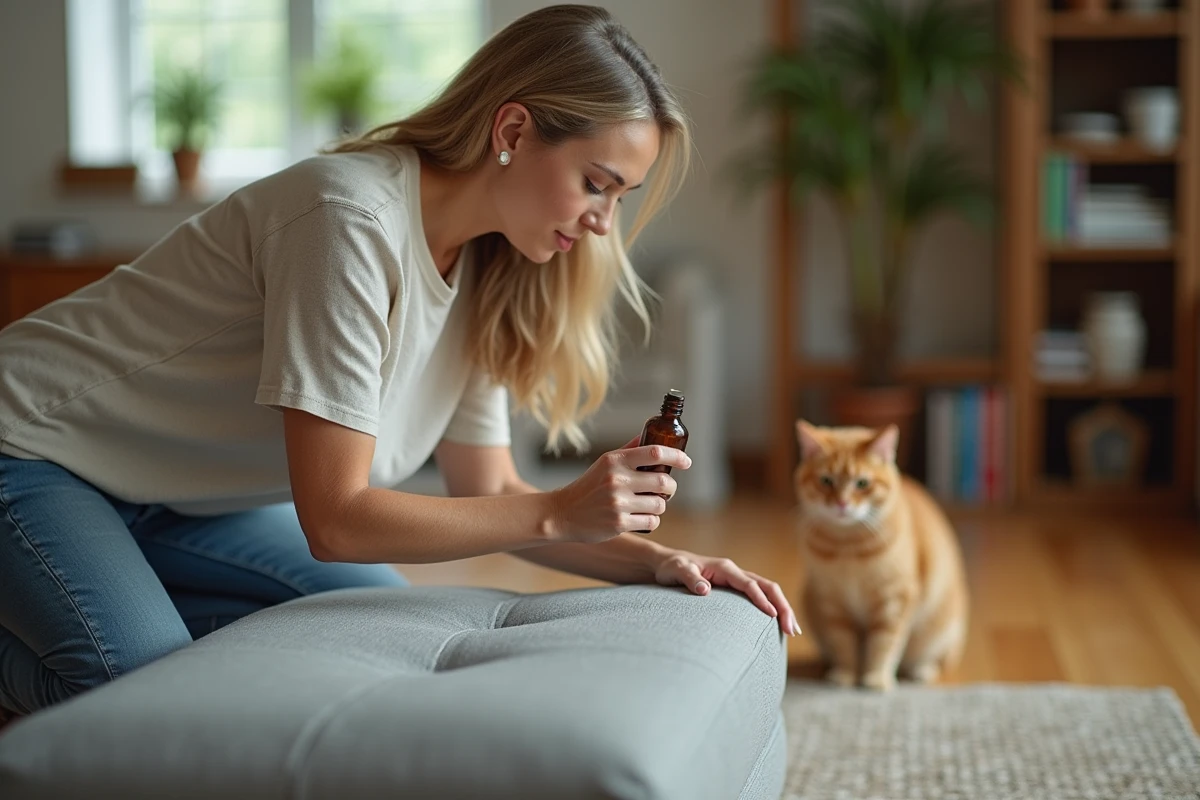
White vinegar and cats: the limits documented by veterinarians
The American Association of Feline Practitioners (AAFP) pointed out in a literature review that olfactory repellents alone have “limited and often transient” effectiveness. This observation does not only apply to vinegar: pepper, lemon, lavender, and essential oils fall into the same category.
The mechanism is simple. If the cat derives a benefit from the area we are trying to protect (food, territory, resting area), it eventually tolerates the unpleasant smell to access the resource. We observe this habituation phenomenon within a few days in the majority of animals.
Respiratory risks in enclosed spaces
The British Small Animal Veterinary Association recommends avoiding the spraying of vinegar near cats. Acidic mists inhaled in a poorly ventilated space can trigger coughing, sneezing, and even worsen pre-existing feline asthma.
Applying vinegar to a cloth and then airing the room reduces this risk. However, directly spraying pure vinegar near a cat is not recommended, especially in a bathroom or narrow hallway.
Direct contact and skin irritation
Used pure on surfaces where the cat lies or rubs, white vinegar can cause skin or paw pad irritations. Diluting it in water (about half and half) limits this problem but also decreases the repellent effect. We then find ourselves facing a rather unsatisfactory compromise.
Vinegar repellent recipe: what works in practice
If you still want to test white vinegar, you might as well do it correctly. Here are the conditions that yield the best results according to field feedback and veterinary recommendations:
- Dilute white vinegar in an equal volume of water and apply with a cloth to the targeted area (window sill, furniture leg, planter edge), never by direct spraying
- Renew the application daily, or even twice a day outdoors, as evaporation cancels the effect in a few hours
- Always air the room after application to avoid any respiratory irritation, especially if the cat lives in the same household
- Do not use on marble, natural stone, or aluminum surfaces, as acetic acid attacks them
Feedback varies on this point: some owners notice a clear effect for several weeks, while others see their cat ignore the vinegar by the third day. The cat’s motivation to access the treated area makes all the difference.
Alternatives to white vinegar for keeping a cat away long-term
When vinegar is no longer enough, a change in approach is necessary. The AAFP recommends combining olfactory deterrence with a concrete modification of the environment rather than multiplying products.
- Provide an additional scratching post or litter box near the problematic area: a cat scratching a couch often seeks a scratching support that is absent elsewhere
- Place a mat with soft spikes or aluminum foil on the surface to be protected, as cats dislike unstable textures under their paws
- Install a synthetic pheromone diffuser (like Feliway) in the affected room, an option validated by several veterinary associations to reduce stress-related urine marking
- Outdoors, coffee grounds or citrus peels placed around plants offer a comparable effect to vinegar, with the advantage of slowly decomposing in the soil
Ground black pepper, often mentioned, also works in the short term. It irritates the cat’s nasal mucous membranes, which raises a similar ethical issue to pure vinegar.
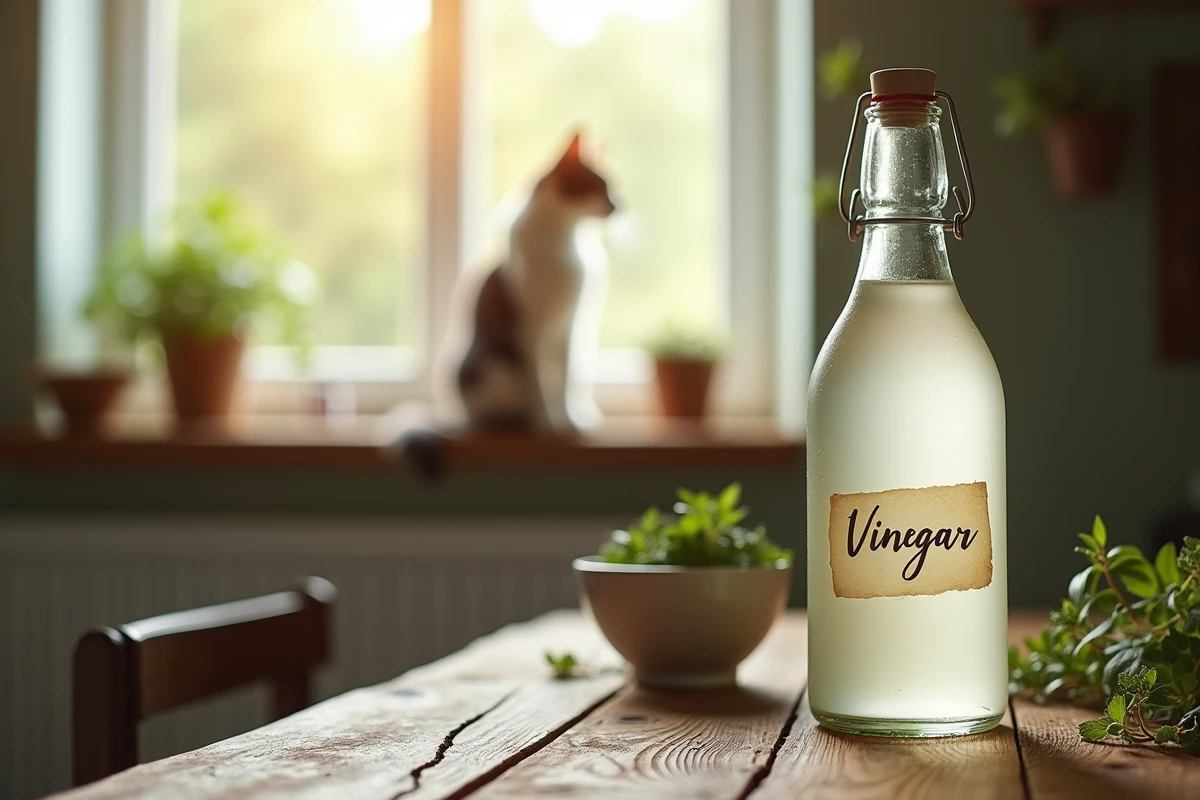
White vinegar against cat urine: a sensible use
Where white vinegar truly provides a service is to neutralize the smell of cat urine on hard surfaces. Acetic acid breaks down the uric acid crystals responsible for the persistent odor. Cleaning a soiled area with diluted vinegar removes the olfactory signal that prompts the cat to return and urinate in the same spot.
This dual effect (cleaning and slight temporary deterrence) makes it a useful ally when dealing with a cleanliness issue. First, clean with diluted vinegar, then implement a long-term solution: clean litter, quiet location, veterinary visit if the behavior persists.
White vinegar is neither a myth nor a miracle solution. It is a temporary tool, not a standalone strategy. Its real effectiveness lasts a few hours, diminishes with the cat’s habituation, and never replaces environmental adaptation or behavioral diagnosis. Using it as a urine odor neutralizer remains its most reliable use.