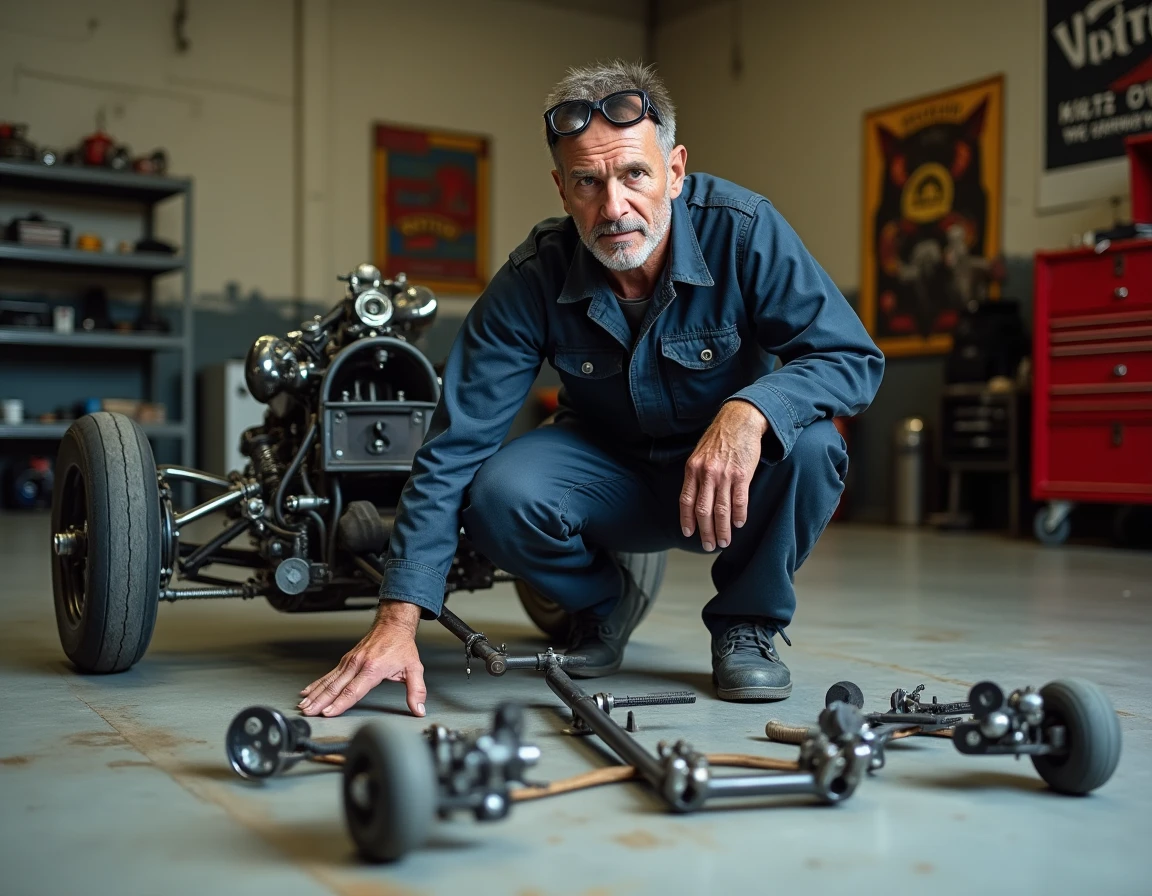
Transforming a motorcycle into a trike means moving from a two-wheeled vehicle to a motorized tricycle by replacing the rear wheel with a two-wheeled axle. The choice of a conversion kit for a motorcycle to trike depends less on the brand of the kit than on three often underestimated technical parameters: compatibility with the original frame, weight distribution after installation, and homologation requirements in France.
Weight distribution after installation: the criterion that catalogs do not detail
You may have noticed that a motorcycle loaded with a full top case behaves differently in turns? The same phenomenon is amplified on a trike because the weight added by the kit is concentrated at the back.
When the mass is too shifted to the rear axle, the trike tends to understeer: it resists changes in direction, and braking distances in curves increase. This problem affects even high-end kits if the base motorcycle is already heavy or if the owner adds luggage.
Before choosing a kit, it is therefore essential to consider the total weight of the setup (kit, motorcycle, luggage, passenger). A good preparer calculates the weight distribution between the front and rear to ensure that the handling remains safe. This type of analysis is indeed what specialized workshops offer when looking into a motorcycle to trike conversion kit suitable for one’s model.
Independent suspension or rigid axle: which rear end for a trike

The type of rear end determines comfort, handling, and budget. There are two main families.
Rigid axle
The rigid axle connects the two rear wheels through a single shaft. It is the simplest mechanically and the least expensive solution. It is suitable for calm use on well-maintained roads.
Its main drawback: when one wheel goes over a bump, the other is also affected. On degraded roads or in sharp turns, comfort and stability suffer.
Independent suspension
Independent suspension isolates each rear wheel, which significantly improves cornering behavior and the absorption of irregularities. Kits with independent suspension are more expensive and often heavier, but the gain in safety and comfort justifies the difference for regular use or long trips.
Why does this choice matter so much? Because a trike does not lean like a motorcycle. In turns, stability relies entirely on the geometry of the rear end and the quality of its suspensions. An independent suspension kit better tolerates trajectory errors than a rigid axle.
Homologation in France: the Isolated Reception (RTI) and its constraints
This is the point that many future trike owners discover too late. In France, a motorcycle converted into a trike must obtain an Isolated Reception (RTI) issued after inspection by the DREAL (Regional Directorate for the Environment, Planning and Housing).
Since the consolidated entry into force of regulation (EU) 168/2013 and its delegated acts, the requirements have tightened. Converted motor tricycles must comply with strict rules on several points:
- The braking system, with in some cases the obligation to retain or add ABS depending on the vehicle configuration
- The structure of the rear axle and the modification of the wheelbase, which must be validated by a reinforced technical file
- Emissions and engine compliance, which must not be altered by the conversion
Some older kits are no longer homologable in a ready-to-install configuration without this technical file. This means that a kit purchased abroad, even of good quality, may turn out to be unusable if the manufacturer does not provide the necessary documents for the RTI. The inspection report is carried out by an accredited laboratory, and the procedure can take several weeks.
Before any purchase, check that the seller or preparer can provide a file compatible with the French procedure. Without homologation, the trike cannot be registered and therefore not authorized to circulate.
Motorcycle and conversion kit compatibility: checks before purchase
Not all kits fit all motorcycles. Compatibility depends on the geometry of the frame, the width of the original swingarm, and the type of transmission (shaft, chain, or belt).
The brands most commonly converted into trikes are Harley-Davidson (notably the Tri Glide and Touring models), Honda (especially the Gold Wing), and certain models from Kawasaki or Suzuki. Manufacturers like Motor Trike or Rewaco offer specific kits for these platforms. A kit designed for a Honda Gold Wing does not fit on a Harley Road King: each kit is sized for a specific model.
Points to check before purchase:
- The exact model reference and year of manufacture of the motorcycle, as frame modifications between generations can render a kit incompatible
- The type of rear transmission, which determines the mechanical connection between the kit and the engine
- The presence or absence of original ABS, since the kit must integrate into the existing braking circuit without compromising it
- The dry weight of the motorcycle, to assess the impact on weight distribution once the kit is installed
Hiring a preparer or DIY
Installing a trike kit requires skills in welding, electricity, and precision mechanics. Specialized preparers have the right tools and know the critical mounting points. A poorly executed installation can compromise braking or steering, with serious consequences for safety.
If you are considering a workshop installation, prioritize a professional capable of also managing the RTI file. This avoids back-and-forth between the installer and the homologation laboratory.
The choice of a motorcycle to trike conversion kit hinges on technical compatibility with your model, the type of rear end suited to your use, and the kit’s ability to pass French homologation. Starting with the question of homologation, even before comparing prices, remains the safest approach to avoid an unusable purchase.