The socca pan, whether made of copper, cast iron, or steel sheet, accumulates after each cooking a mixture of charred chickpea batter and fat cooked at high temperatures. This residue, much more tenacious than the usual dirt on a domestic cooking sheet, poses a specific problem: if not cleaned properly, the surface loses its protective seasoning or, conversely, develops blackened layers that alter the taste of subsequent batches.
The material of the pan entirely determines the cleaning method. Applying the same technique to a tin-lined copper pan and a raw cast iron pan risks either a deep scratch or accelerated oxidation. This distinction should be made before any handling.
Charred chickpea residues: why the socca pan poses a unique problem
The socca batter, made of chickpea flour, water, and olive oil, traditionally cooks at very high temperatures. This baking or direct flame cooking produces a charred crust that adheres to the metal surface much more aggressively than a simple splash of fat.
Chickpea flour contains proteins and sugars that, under intense heat, undergo a caramelization reaction and molecular adhesion to the metal. Removing the residues while the pan is still warm significantly reduces the cleaning effort, as this crust hardens upon cooling and becomes very difficult to detach without abrasion.
Recent guides on maintaining cooking surfaces converge on this point: immediate cleaning after use is now preferred over intensive stripping afterward. For socca, this rule is even more relevant, as the dried batter forms an almost ceramic film once cold.
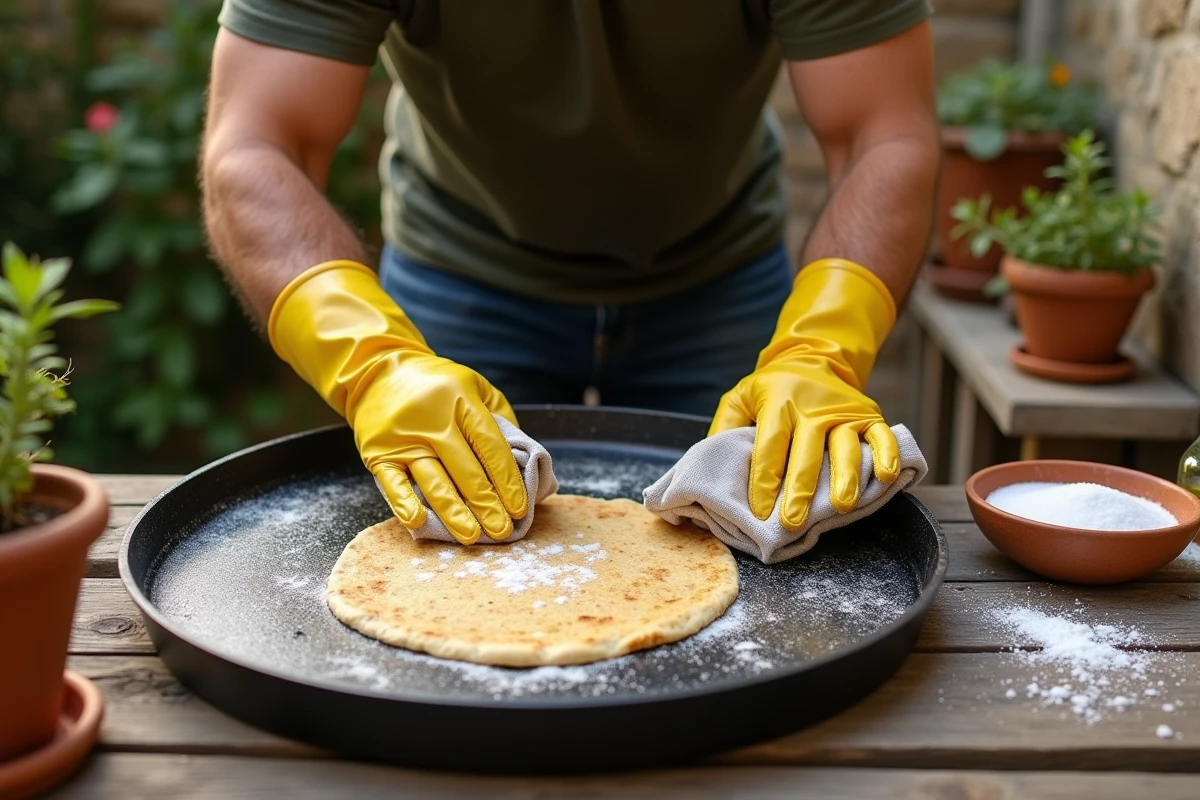
Cleaning a socca pan made of copper, cast iron, or steel: adapting the method to the material
The most common trap is using an unsuitable product or tool for the metal of the pan. The consequences range from superficial scratches to the destruction of the seasoning, or even the appearance of rust. To properly choose your socca pan, one must also anticipate its daily maintenance.
Tin-lined copper pan
The tin-lined copper used in traditional Nice pans cannot withstand metal pads or concentrated acidic products. A soft cloth soaked in hot water is sufficient in most cases, provided you act quickly after cooking. For ingrained residues, a paste of baking soda applied for a few minutes softens the crust without attacking the tinning.
Raw cast iron pan
Cast iron accumulates a seasoning (layer of polymerized fat) that protects it from rust and prevents the batter from sticking. Cleaning with soap is not recommended on a seasoned cast iron pan, as it dissolves this protective layer. The most effective method is to scrape the residues with a rigid spatula while the pan is still hot, then wipe with a slightly oiled absorbent paper.
If rust appears despite everything, scrubbing with coarse salt and half a lemon allows it to be removed without overly aggressive mechanical abrasives. The pan should then be re-oiled and heated empty to restore the seasoning.
Steel sheet pan
Untreated steel reacts similarly to cast iron. However, some modern pans receive a non-stick coating or enamel. On these surfaces, abrasives and metal scrapers should be avoided. A short soak in hot water mixed with white vinegar removes most residues, followed by a gentle sponge wipe.
Baking soda, white vinegar, citric acid: which products work on a socca pan
The three most cited household products for cleaning cooking surfaces are baking soda, white vinegar, and citric acid. Their effectiveness depends on the type of residue and the material of the pan.
- Baking soda acts as a mild abrasive and an alkaline that breaks down cooked fats. Mixed with a little water to form a paste, it is applied to the soiled areas and left to act for a few minutes before rinsing. Suitable for copper, cast iron, and enameled steel.
- White vinegar, acidic, dissolves limescale deposits and degreases smooth surfaces. On a seasoned cast iron pan, its acidity can weaken the seasoning if applied for too long. It should be reserved for enameled or coated steel pans, rinsing quickly.
- Citric acid, more powerful than vinegar, works on stubborn deposits but presents the same risk for unprotected surfaces. Its use remains relevant on tin-lined copper pans as long as contact does not exceed a few minutes.
Commercial abrasive products (scouring creams, powders) should be avoided on any surface that has a coating or seasoning. Their immediate effectiveness comes at the cost of a gradual degradation of the metal’s natural protection.
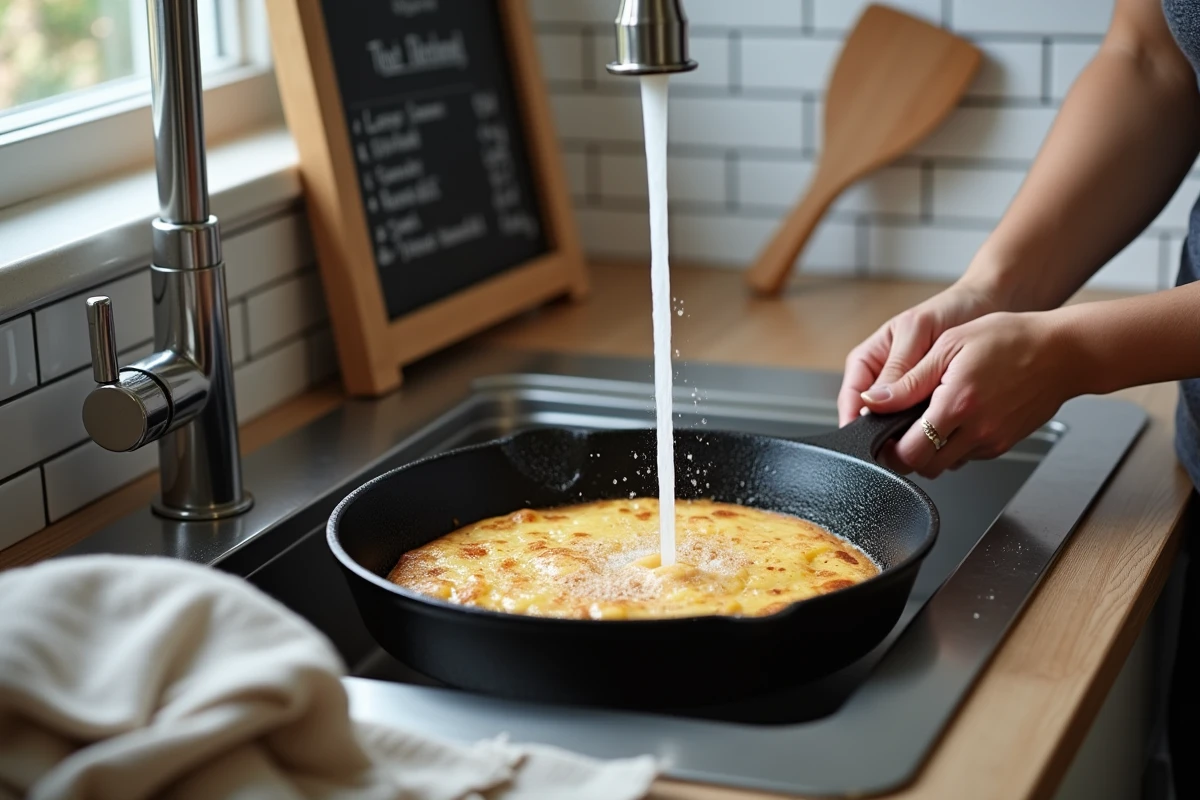
Maintenance routine after each socca cooking
The goal of a regular routine is to prevent the accumulation of successive charred layers, which eventually deform the surface and alter the cooking.
- As soon as it comes out of the oven, let the pan cool for a few minutes without plunging it into cold water (thermal shock can deform the metal, especially thin copper).
- Scrape the residues with a wooden or rigid plastic spatula while the pan is still hot.
- Wipe with a damp cloth with a dab of baking soda if any traces persist.
- On cast iron, apply a thin layer of oil after cleaning and wipe off the excess. This step maintains the seasoning and prevents rust.
Field reports vary on the frequency of deep cleaning: some users perform a complete stripping once or twice a year, while others never do, believing that the old seasoning improves cooking. A well-maintained seasoning makes regular cleaning almost instantaneous.
The socca pan remains a utensil that improves with use, provided the nature of its material is respected. Regular, appropriate maintenance without aggressive products preserves both the cooking surface and the taste quality of each batch.