
In the cozy darkness of a burrow, life begins to stir for young moles. Barely born, these creatures, blind and dependent, start to learn about existence underground. Their growth is a silent adventure, marked by key stages, from the development of their digging paws to their first excursion to the surface. This underground journey is essential for understanding the mechanisms that shape these soil engineers. Their early days are a critical period where their ability to survive in a dark world, away from prying eyes, is at stake, where every progress is vital for their future.
The First Days of the Mole: Birth and Early Developments
Within the damp twilight of the first centimeters of soil, the birth of the mole is part of the cycle of life. The baby mole, or Talpa europaea in scientific terms, begins its existence as a burrowing mammal, completely vulnerable. The reproduction of this species, characterized by its discretion, generally occurs between February and April, a period during which the fertility of the European mole reaches its peak.
The first moments of life are dedicated to rapid development. The young, blind at birth, depend on maternal warmth and nourishing milk. Their growth is astonishing; every day their size increases, and their senses sharpen. Their fur, initially absent, begins to take shape, foreshadowing their future ability to camouflage in their natural habitat.
The sensory awakening of these young moles is crucial. Their sense of smell develops, honing their ability to detect prey such as earthworms and insects that will make up the bulk of their diet. The sense of hearing, equally essential, will allow them to perceive vibrations in the soil and communicate with one another, while touch, particularly through their whiskers, will help them navigate the darkness of their underground world.
These early stages of life herald a fundamental moment: the time when the young leave the nest. This transition is marked by the acquisition of a certain autonomy and signals the beginning of their learning to dig the famous underground tunnels that characterize their species. The foundations of their existence are rooted in these early days, where each adaptation shapes their survival and integration into the underground ecosystem.
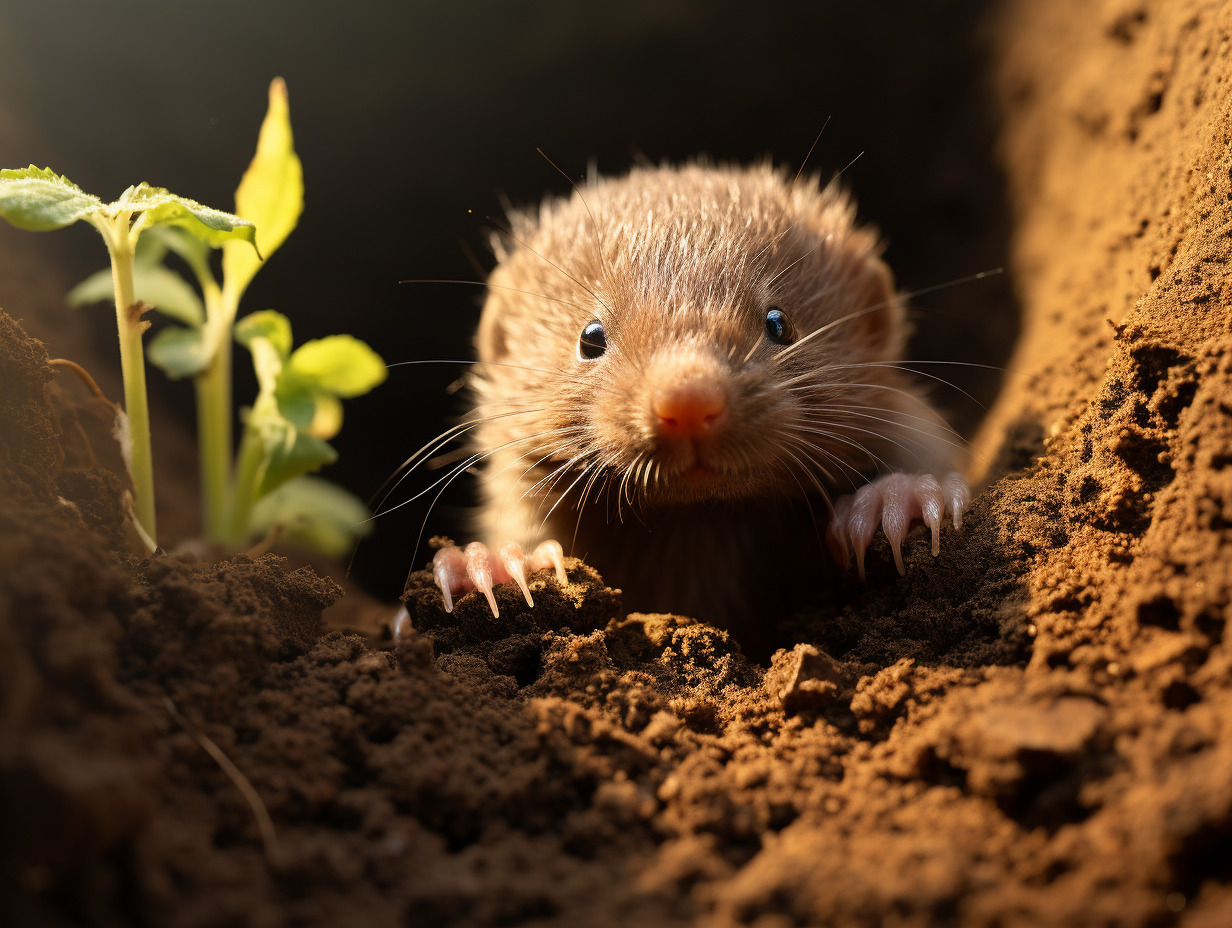
From Dependence to Autonomy: Growth and Learning in the Young Mole
The process of growth in the young mole is accompanied by a paradigm shift, moving from total dependence to gradual autonomy. This transformation is observed both in the mastery of their bodies and in the discovery of their environment. The respiratory system of the mole, remarkably adapted to confined spaces, plays a fundamental role in this transition. Thanks to it, the young mole can engage in the underground tunnels, a natural architectural work shaped by previous generations.
The European mole, a true soil engineer, primarily feeds on earthworms and insects, key components of its diet. The diversity of this diet is essential for its development. The sensory triptych of smell, hearing, and touch sharpens during this growth phase, allowing the mole to become an effective hunter and meet the demands of its habitat.
The construction of the network of underground tunnels, a true masterpiece of the species, requires a skill that young moles acquire quickly, sometimes digging up to 20 meters a day. This incessant activity, carried out day and night, reflects the boundless energy of these mammals and their contribution to soil aeration and fertilization, even though they are sometimes considered pests in gardens and crops. Despite this reputation, the European mole plays a valuable ecological role, a fact often overlooked.