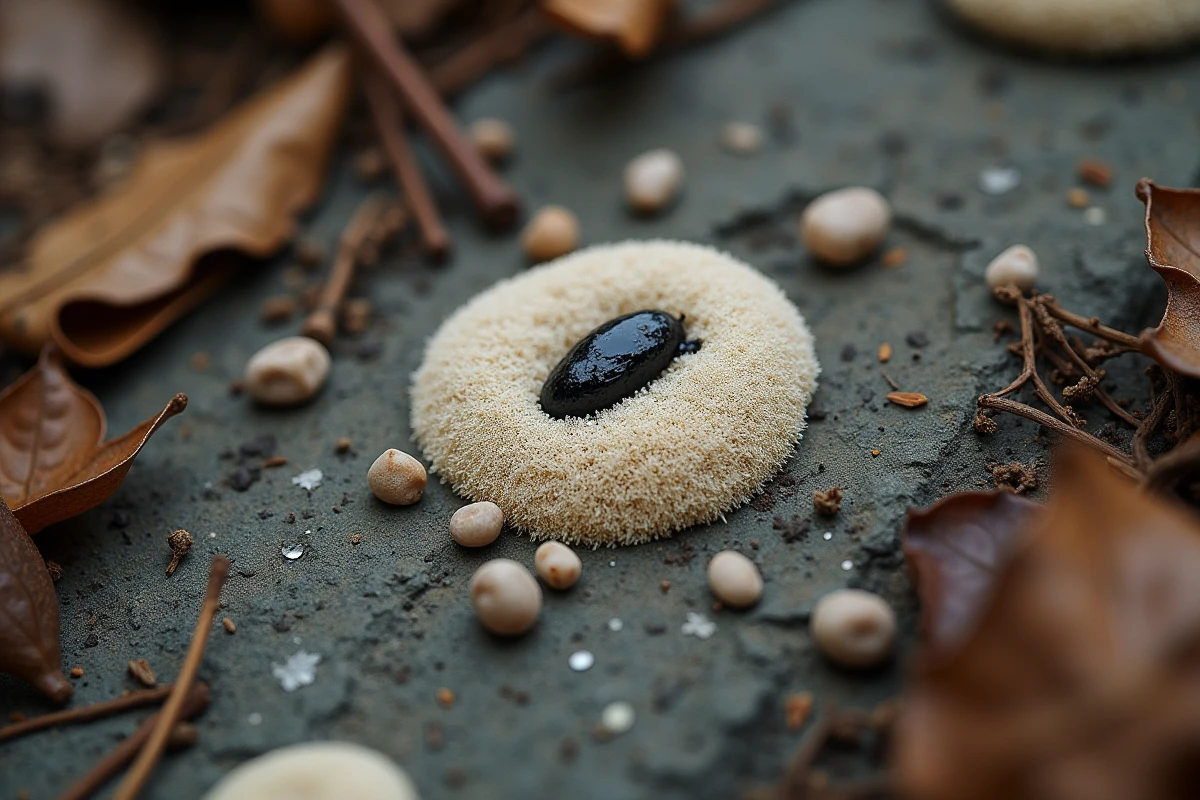
Finding a suspicious droppings in a garden, garage, or along a dry stone wall rarely inspires enthusiasm. However, knowing how to identify snake poop allows you to confirm the presence of a reptile without ever having crossed paths with it and to adjust your reaction accordingly. Snake droppings have quite unique characteristics that clearly distinguish them from those of birds, hedgehogs, or weasels, provided you know what to observe.
Urates and feces: the dual component unique to snakes
The first reflex when faced with a suspicious poop is to look for a clue that only reptiles produce. Snakes have a cloaca, a single opening through which digestive and urinary waste pass. The result is a composite deposit, in two distinct parts.
The fecal fraction appears as a dark, brown to black sausage, often slightly twisted. Attached to this dark part, a white or yellowish, chalky and crumbly mass corresponds to the urates, the solid form of urine in reptiles. This combination of feces plus urates is the most reliable criterion for identifying snake droppings.
To understand in detail how to recognize snake poop, you must first observe this dual component. A bird also produces a white deposit, but the proportion of urates is much higher, resulting in a mostly white and liquid dropping. In snakes, the brown part clearly dominates.
Color and inclusions: what snake poop reveals about the diet
The color of the droppings varies according to the last meal. A black or dark brown sausage indicates a recent protein meal (rodent, lizard). A lighter, sometimes greenish hue signals a prolonged fast or the ingestion of different prey such as amphibians.
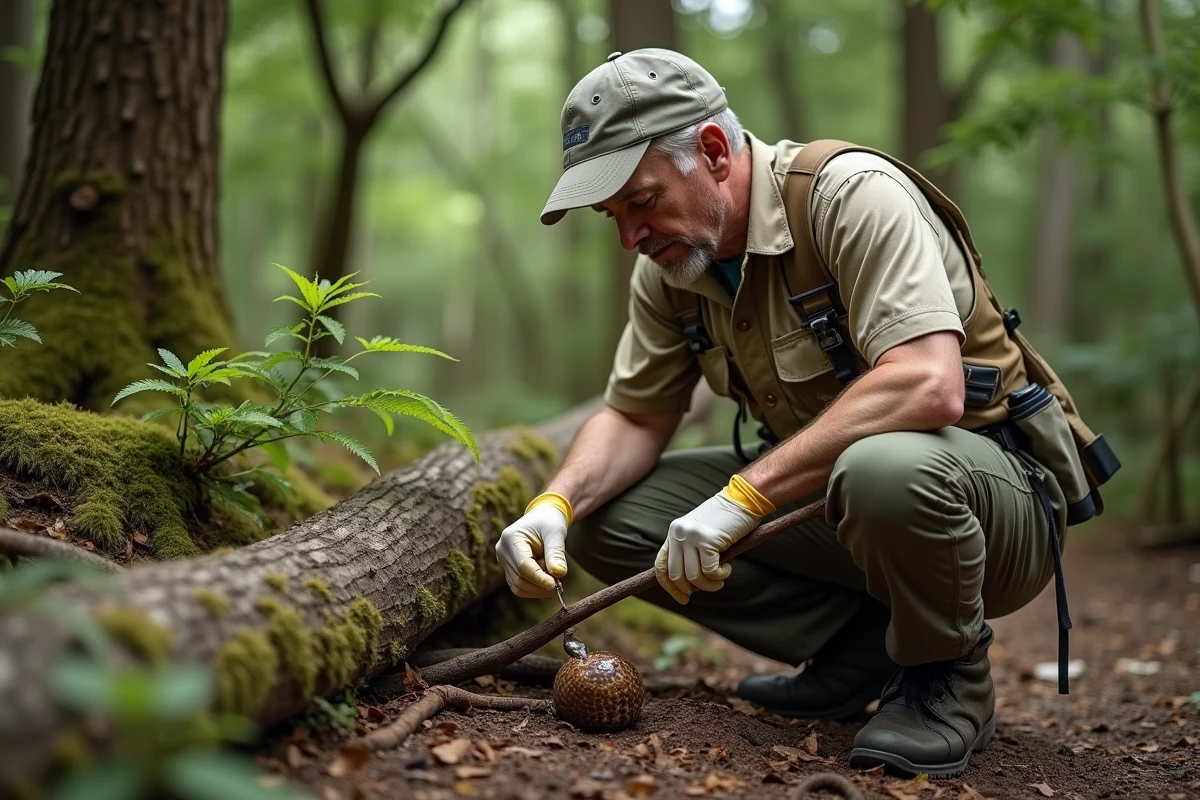
The most telling element remains what the poop contains. By examining it closely (with a stick, not bare hands), you can spot:
- Fragments of bones or small skulls of micromammals, typical of snakes that hunt voles and mice
- Lizard scales, a sign of a grass snake or a smooth snake
- Aggregated hairs, remnants of undigested fur from a rodent
- More rarely, small feathers, if the snake has consumed a nestling
These inclusions not only confirm the reptilian origin of the droppings but also allow you to deduce what prey is circulating in the area. The composition of grass snake droppings provides information about local biodiversity, as it reflects the presence of micromammals, lizards, and amphibians in the garden’s food chain.
Location of droppings: a clue to distinguish grass snakes from vipers
Visual appearance is not always enough. The location where the poop is found provides additional information that is often overlooked.
Vipers, being more sedentary and attached to their thermoregulation areas, usually defecate near their basking spots: flat stones, dry walls exposed to the south, sunny wood piles. Finding several droppings concentrated in this type of microhabitat suggests the presence of a viper rather than a grass snake.
Grass snakes, on the other hand, move around more. Their droppings are often found isolated along hunting paths: edges of hedges, pond borders, passages between the vegetable garden and the compost. Droppings scattered along a linear path suggest a grass snake.
The available data do not allow for certain species distinction based solely on location. This parameter is used in conjunction with visual observation and the size of the droppings (French vipers, being smaller, produce more modest droppings than large grass snakes).
Common confusions with hedgehogs, weasels, and birds
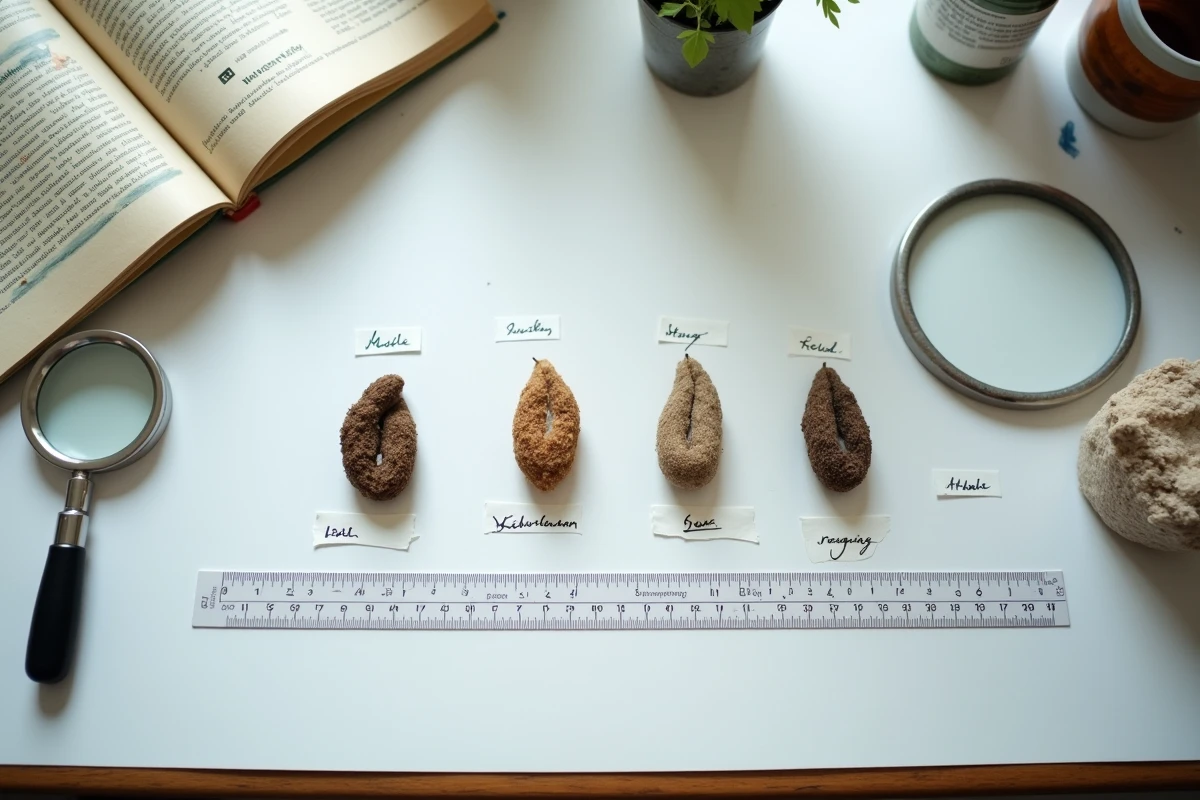
The majority of identification errors involve three animals whose droppings share a vague resemblance to those of a snake.
- The hedgehog produces cylindrical, black, and granular droppings (visible insect debris), deposited directly on the lawn. No white urate deposit accompanies these droppings, which immediately excludes a snake
- The weasel leaves long droppings with a very pronounced musky odor, often at height (walls, roof edges). Sometimes you can find fruit pits, a content that snakes never produce
- Bird droppings are mostly white and liquid, with a proportion of urates much higher than that observed in snakes. The absence of a structured dark sausage and bony inclusions clearly distinguishes them
The criterion that often decides in most cases is the simultaneous presence of a brown fecal sausage and a chalky mass of urates. Mammals do not produce this, and birds reverse the ratio.
Health precautions regarding reptile droppings
Snake droppings can harbor bacteria responsible for salmonellosis. This contamination mainly concerns people who handle the droppings without protection or pets that sniff them closely.
Collection should be done with disposable gloves or using a turned bag. Cleaning the affected area with soapy water is sufficient in the vast majority of situations. No bare-hand handling is recommended, even if the droppings appear dry and old.
Spotting snake droppings in a garden is not alarming in itself. Grass snakes actively participate in regulating rodent populations, and their presence indicates a healthy local ecosystem. The only situation that warrants particular vigilance is the suspicion of a viper in close proximity to a living area, especially if young children or pets frequent the area.